


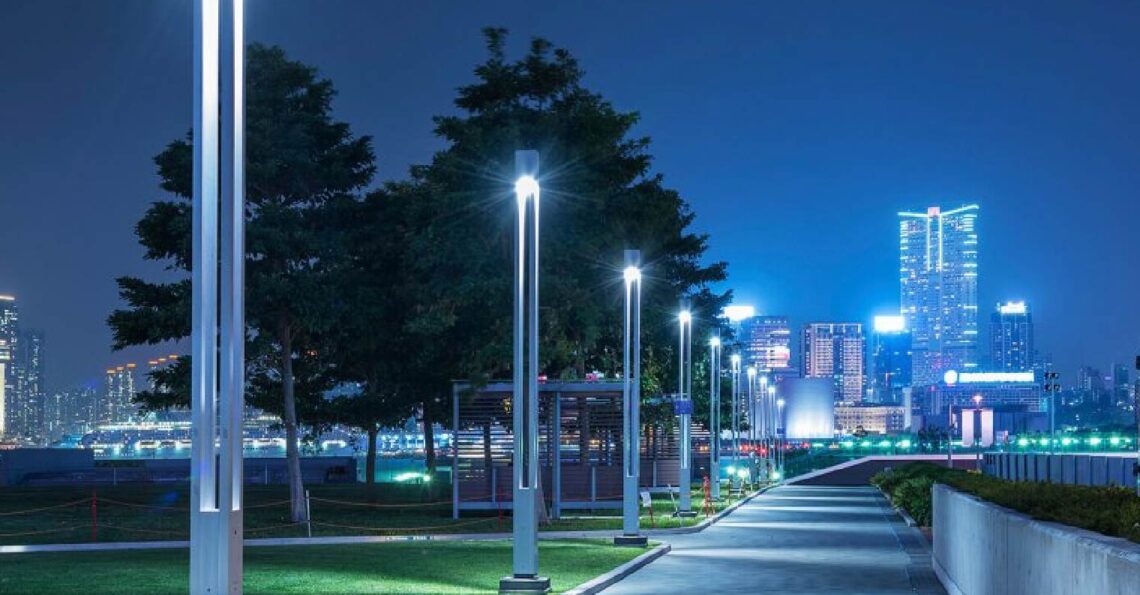
Smart Lighting for Modern Cities
Traditional urban lighting systems typically operate on fixed schedules and maintain relatively uniform power levels for extended periods. As the number of lighting points increases, this operating model not only drives up energy consumption but also makes inspection, fault detection, and maintenance more complex.
Antek’s Smart Lighting Solution is designed to establish a connected, centrally monitored, and remotely controlled lighting infrastructure. By integrating LED luminaires, lighting controllers, sensors, and communication networks, each lighting point can function as an intelligent node within the broader urban management ecosystem.
Adaptive Lighting Control Based on Real-World Demand
Instead of relying solely on fixed on/off schedules, the system enables lighting levels to be dynamically adjusted by area, road segment, or device group.
Operational scenarios can be configured based on:
-
Time of day.
-
Ambient light conditions.
-
Vehicle or pedestrian traffic density.
-
Actual usage requirements in specific areas.
-
Energy-efficiency policies defined by the system operator.
For example, during periods of low traffic volume, lighting output can be reduced to an appropriate level. When vehicles or pedestrians are detected within the area, the system can automatically increase illumination according to predefined operating scenarios.
This adaptive operating model helps achieve an effective balance between lighting requirements, urban safety, and energy efficiency.
Centralized Monitoring and Management
Through a centralized management platform, operators can monitor and manage the entire lighting system from a unified interface.
Operational parameters such as device status, energy consumption, network connectivity, and operating history can be continuously collected and recorded to support system administration and performance analysis.
When an abnormal condition or device fault occurs, the system can detect the event and generate an alert, enabling technical teams to quickly identify the affected location instead of conducting manual inspections across the entire road network.
Proactive Maintenance
One of the key benefits of Smart Lighting is its ability to transition lighting infrastructure from a reactive maintenance model to a proactive maintenance approach.
Operational data enables management teams to:
-
Rapidly detect malfunctioning lighting points.
-
Identify the exact location of devices requiring inspection.
-
Track equipment operating and maintenance history.
-
Reduce the need for manual field inspections.
-
Support preventive maintenance and equipment replacement planning.
This data-driven approach helps reduce maintenance response times, improve system availability, and optimize maintenance resources.
Value Delivered by Antek
Through its Smart Lighting solution, Antek aims to help cities deploy lighting infrastructure that is more energy-efficient, easier to manage, and scalable for future expansion.
The solution can be deployed across a wide range of environments, including:
-
Urban roads and transportation corridors.
-
Residential areas.
-
New urban developments.
-
Industrial zones.
-
Parks and public squares.
-
Public spaces.
-
Tourism and recreational areas.
Data generated by the Smart Lighting system can also be integrated into a broader Smart City management platform, providing operators and municipal authorities with greater visibility into urban infrastructure and supporting more informed, data-driven operational decisions.