
Smart Pole

Smart Pole – A Multifunctional Integrated Smart Urban Infrastructure Solution

A modern urban roadway may require four to five different types of poles: lighting poles, surveillance camera poles, Wi-Fi poles, LED display poles, and environmental sensor poles. Each typically requires its own foundation, cabling infrastructure, and maintenance team. As a result, costs increase not only with the number of poles deployed, but also with the growing complexity of operation and maintenance.

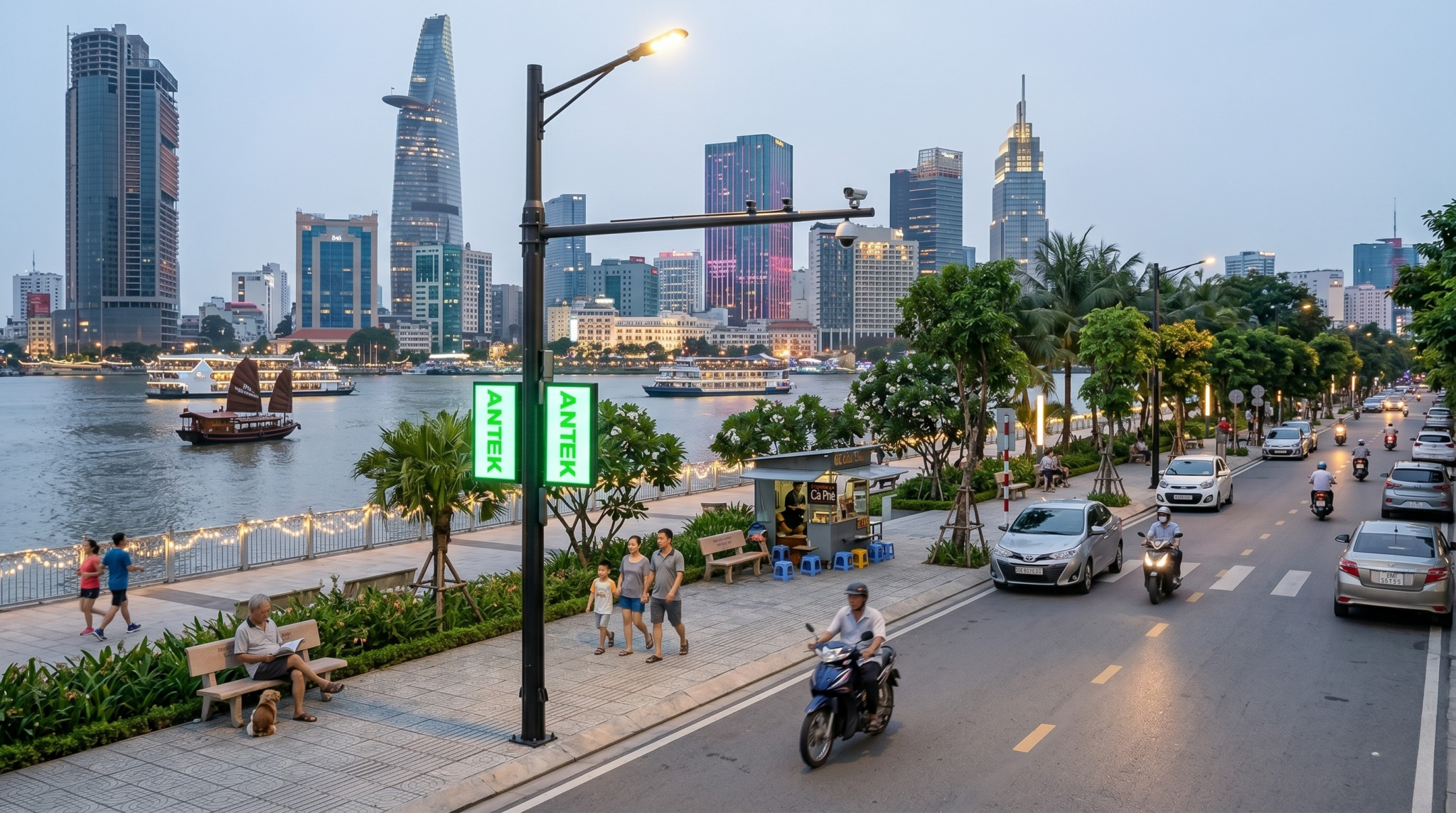
Antek’s Smart Pole addresses this challenge with a single integrated solution. It consolidates lighting, security, connectivity, and environmental monitoring infrastructure into one intelligent pole, centrally managed through a real-time IoT platform. More than just a modern lighting pole, it serves as a core infrastructure backbone for the smart city.

What Is a Smart Pole? Why Do Modern Cities Need It?

A Smart Pole, also known as an integrated smart pole, is a multifunctional IoT infrastructure solution installed along sidewalks or road medians to consolidate and replace multiple types of conventional urban infrastructure.

The global smart pole market is experiencing strong growth. According to industry data, the market was valued at USD 5.44 billion in 2024 and is projected to grow at a compound annual growth rate (CAGR) of 17.8% from 2025 to 2032. This clearly indicates that investment in digital infrastructure is no longer merely an option—it is becoming an irreversible global trend.

In Vietnam, investors and urban management authorities are facing three key challenges:

  • Fragmented infrastructure: Multiple standalone systems operate independently, with limited interoperability and no unified means of monitoring.

  • High operating costs: Maintaining each device and subsystem separately is costly and operationally inefficient.

  • Lack of unified data: Without a centralized data platform, rapid and informed decision-making on traffic, environmental conditions, and public security becomes difficult.

Antek’s Smart Pole is designed to address all three of these challenges through a single integrated solution.

Gemini_Generated_Image_2uafjx2uafjx2uaf

7 Core Functions Integrated into a Single Smart Pole

The key strength of Antek’s Smart Pole lies in its flexible modular architecture, allowing each pole to be configured differently based on its installation location and specific operational requirements.

1. Smart Lighting – 30–50% Energy Savings

The LED lighting system integrated into the Smart Pole goes far beyond simple on/off control. Intelligent dimming technology automatically adjusts brightness based on traffic volume, pedestrian density, and real-time weather conditions.

The measurable benefits include 30–50% savings in monthly electricity costs, automatic fault detection, and real-time alerts sent directly to the operations center—eliminating the need for manual inspections.

Frame 86

2. AI Camera for Security and Traffic Monitoring

  • High-resolution IP cameras combined with edge computing enable data to be processed and analyzed directly at the point of capture. The AI camera system is capable of:

    • Classifying vehicles and measuring vehicle speeds in real time

    • Detecting abnormal behavior, unauthorized intrusion, and traffic accidents

    • Supporting law enforcement with accurately time-stamped traffic data

    • Providing compatibility with C-V2X connected transportation infrastructure to support future autonomous vehicle applications


    Frame 87

3. Public Address System – Real-Time Emergency Alerts

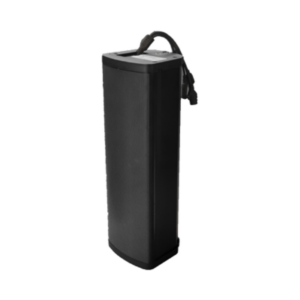
Weather-resistant outdoor speakers are directly connected to the centralized management platform. In the event of an incident or emergency, alert broadcasts can be synchronized instantly across all Smart Poles within the designated area—without requiring manual intervention.
Frame 90

4. High-Speed Public Wi-Fi

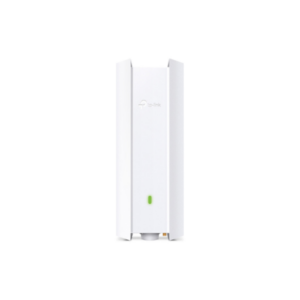
The Wi-Fi access point is installed directly on the Smart Pole, providing high-bandwidth, low-latency connectivity for residents and visitors. It also serves as the network backbone for other IoT devices integrated into the same pole.
5. Multimedia LED Display – A Non-Budget Revenue Source

The weather-resistant outdoor LED display serves as both an effective public communication channel and a revenue-generating platform. Content can be remotely managed through a centralized CMS, including commercial advertising, public information such as weather and air quality updates, and emergency notifications.

6. SOS Button and Emergency Two-Way Communication

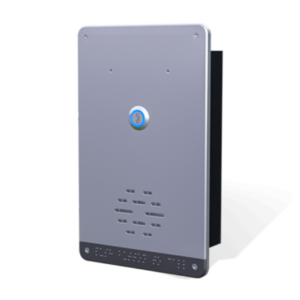
Citizens can press the SOS button located at the base of the Smart Pole to connect directly with the 24/7 operations center. The integrated camera and microphone support real-time incident monitoring and precise location identification, enabling rapid emergency response and resource coordination.
7. Environmental Sensors – Real-Time Urban Data

Multi-parameter environmental sensors continuously monitor key indicators, including particulate matter (PM2.5 and PM10), temperature, humidity, hazardous gases, and floodwater levels. When any parameter exceeds a predefined threshold, the system automatically triggers an alert and synchronizes the data with the Big Data platform for long-term analysis and research.

Benefits for Each Stakeholder Group

Investors

Optimize revenue streams from 5G infrastructure leasing and advertising services.

Shorten the investment payback period through multifunctional integration.

Management Authority

Centralized operations management through an intuitive dashboard.

Rapid response to emergency situations through the integrated SOS system.

Residents

Enjoy a safer, more modern, and more convenient living environment.

Access high-speed Wi-Fi and continuously updated public information.

Investors and Urban Management Authorities

Smart Pole can help reduce OPEX (operating expenditure) by 20–40% compared with conventional distributed infrastructure models. Integrated LED displays and Wi-Fi infrastructure also create new opportunities for commercial monetization, transforming the lighting pole from a cost center into a revenue-generating asset.

For urban developments and real estate projects, a unified smart infrastructure system also enhances the overall brand image of the development and can support higher rental rates and property transfer values.

Operations Management Team

Instead of inspecting each system through separate operational procedures, the operations team can monitor the status of all devices through a single centralized interface. Automated fault alerts and predictive maintenance scheduling help shorten incident response times and significantly reduce the risk of human error.

Residents and Businesses

Residents in areas equipped with Smart Poles benefit directly from brighter and safer streets at night, reliable public Wi-Fi connectivity, continuously updated environmental and traffic information, and immediate access to emergency assistance from the pole at any time.

Where Can It Be Deployed? Applications of Antek Smart Pole

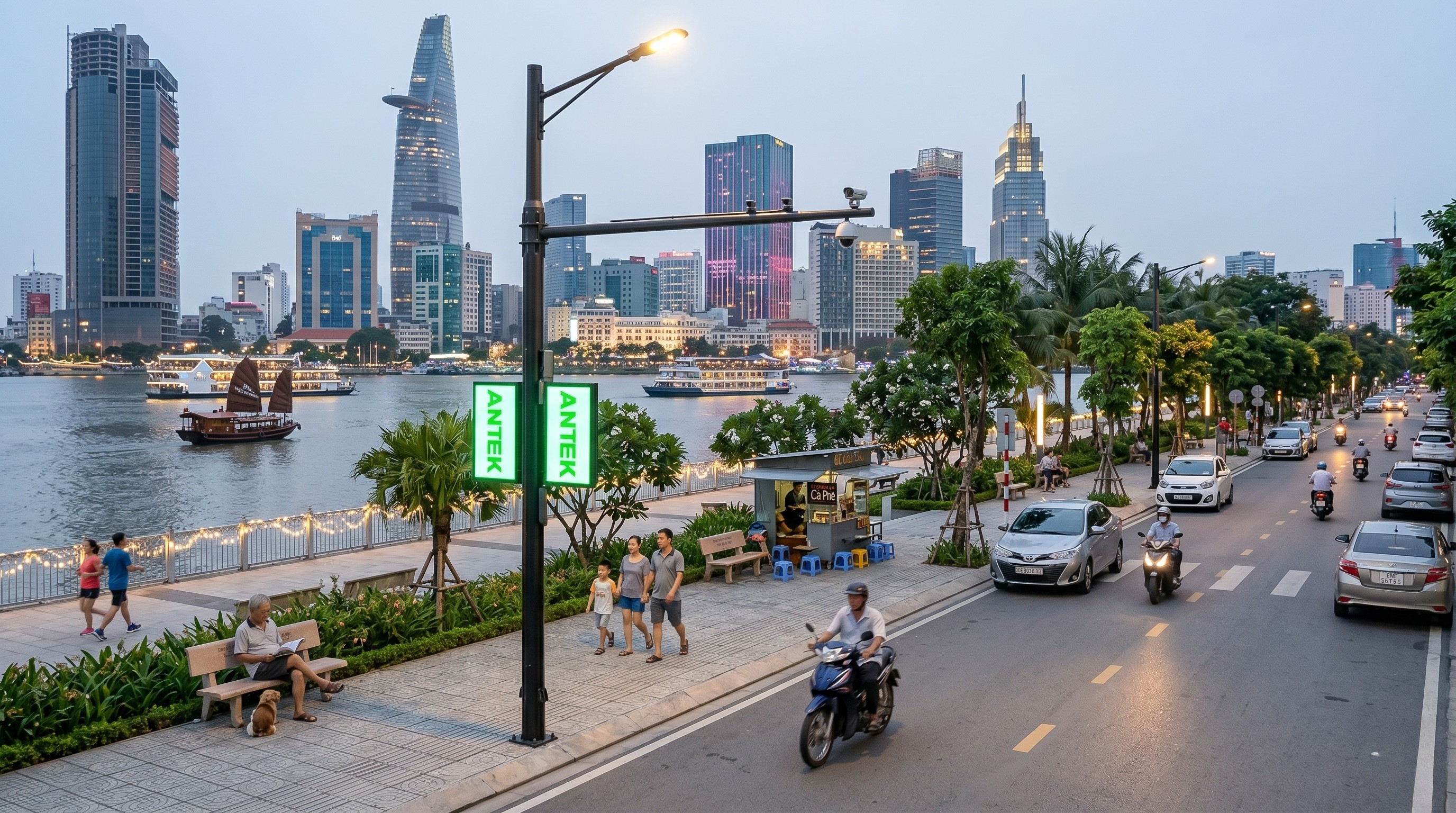
Antek’s integrated Smart Pole solution is suitable for a wide range of deployment scenarios:

  • Major urban arterial roads: Focused on traffic monitoring and public security surveillance.

  • Industrial zones: Prioritizing perimeter security, vehicle access control, and environmental monitoring.

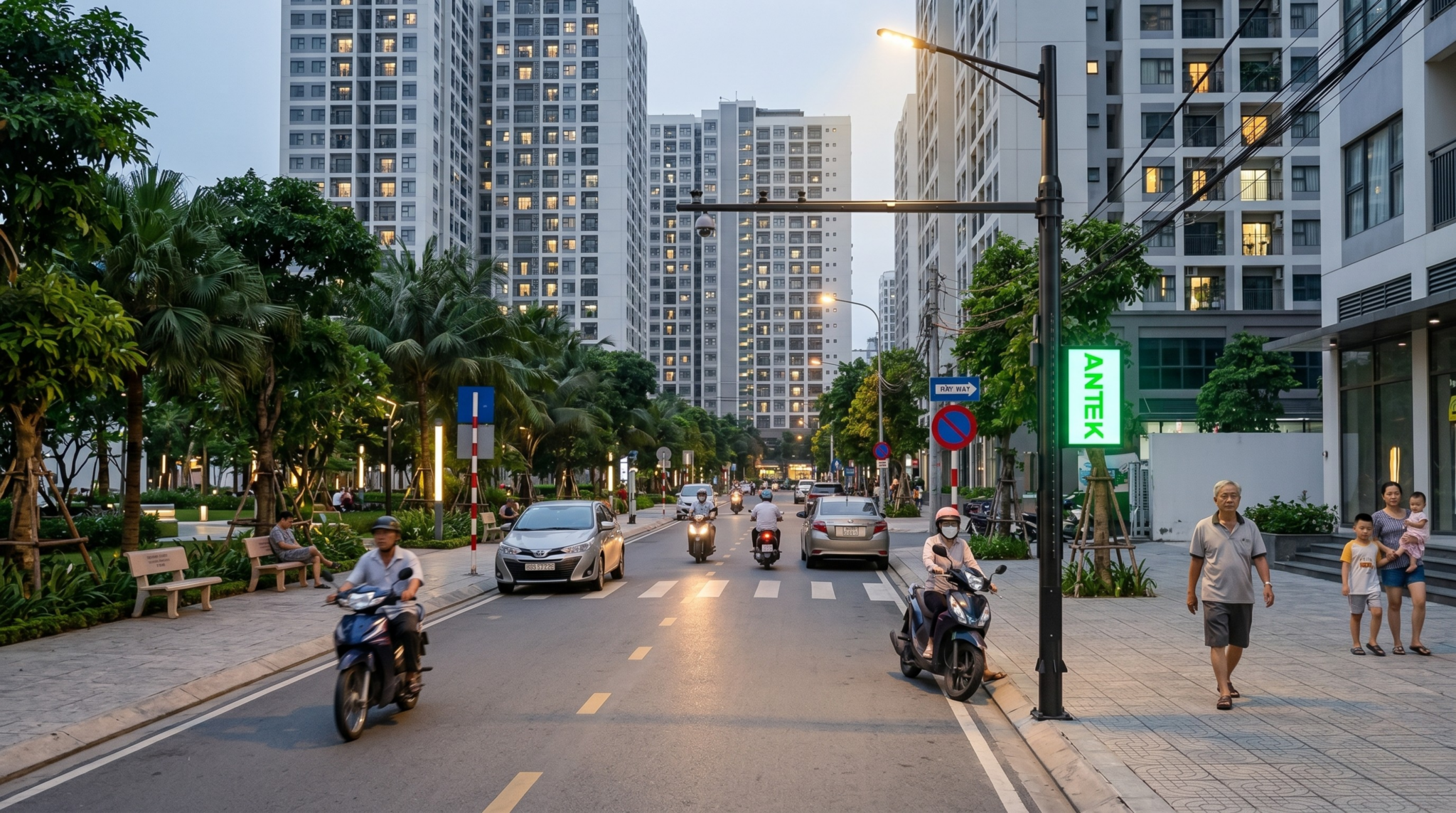
  • New urban developments and premium residential areas: Full-module deployment from the planning stage to ensure seamless and unified infrastructure integration.

  • Parks and public squares: Prioritizing public Wi-Fi, environmental monitoring, and community information dissemination via LED displays.

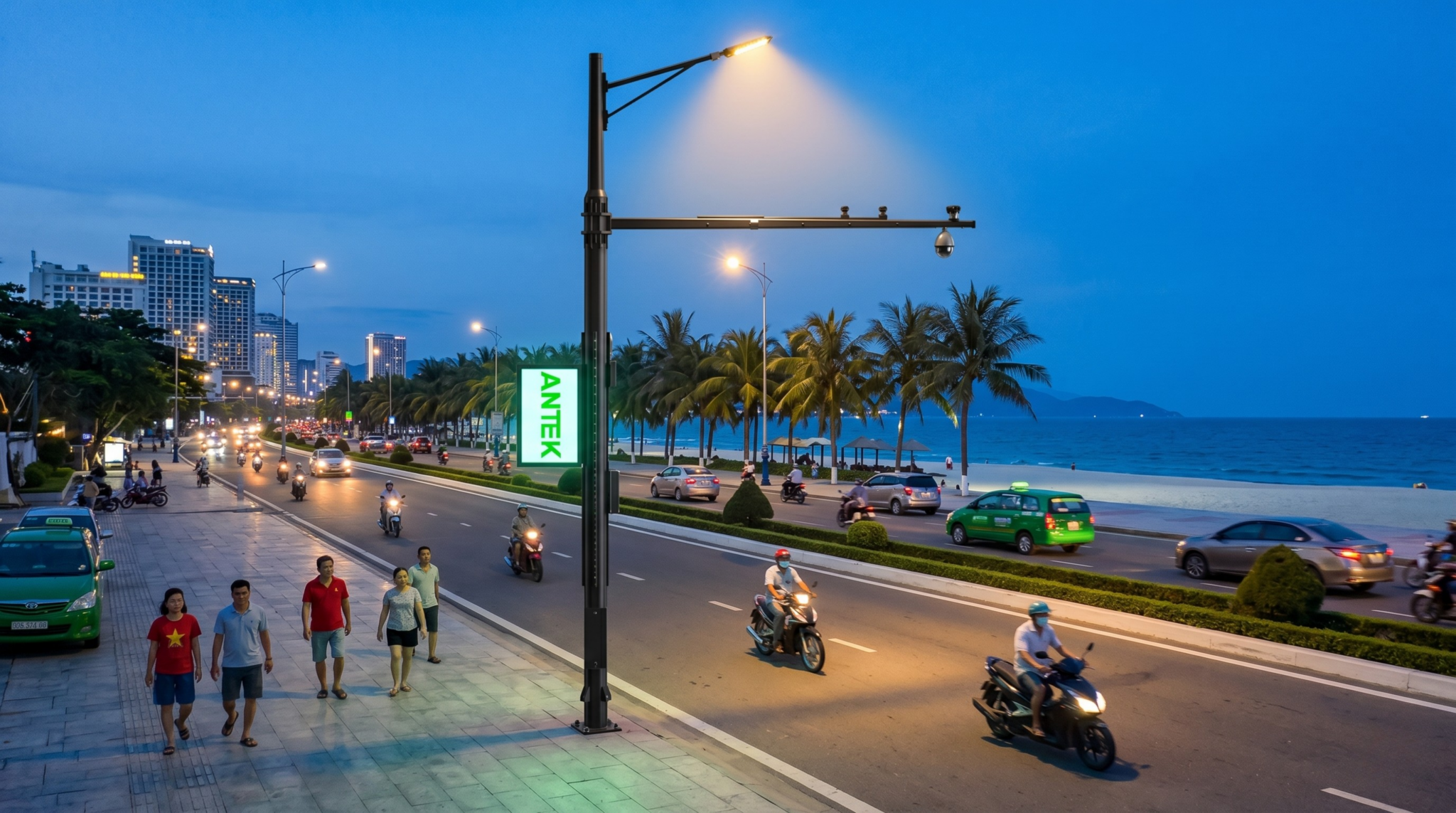
  • Coastal roads and tourist areas: Enhanced with flood monitoring sensors and extreme weather warning capabilities.

Antek’s modular design enables site-specific configuration, allowing each Smart Pole installation to be tailored to the operational requirements of its location rather than following a fixed configuration.
gallery-thumbnail-0

Deployment Roadmap: 4.5 Months from Site Survey to Handover

Antek is committed to a transparent deployment roadmap comprising seven clearly defined phases:

Phase Duration Scope of Work
Site Survey and Assessment
1 week
Conduct a technical survey of the pilot area and define project objectives
Technical Proposal and Cost Estimation
2 weeks
Develop the system architecture, prepare the Bill of Materials (BOM), and finalize the cost estimate
Contract Signing
1 week
Execute the contract and conduct the project kick-off
Procurement
6 weeks
Procure equipment in accordance with the approved equipment list
Detailed Technical Design
2 weeks
Develop detailed configurations for the CMS platform
Installation and Deployment
4 weeks
Install equipment, deploy software, and perform system testing
Trial Operation and Handover
2 weeks
Optimize the system, prepare as-built documentation, and conduct training

Conclusion

Smart Pole is not merely a product—it is a strategic decision for urban infrastructure development. Instead of investing in multiple standalone systems, Antek’s Smart Pole consolidates essential functions into a single integrated platform, helping reduce initial capital expenditure, lower long-term operating costs, and establish scalable infrastructure ready to support future smart city applications.

If you are planning the development of an urban area, industrial zone, or transportation infrastructure project, contact the Antek team for a solution tailored to your specific scale and budget. Antek also offers an initial technical site survey free of charge.